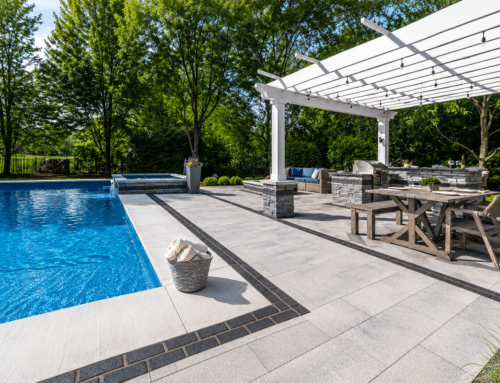
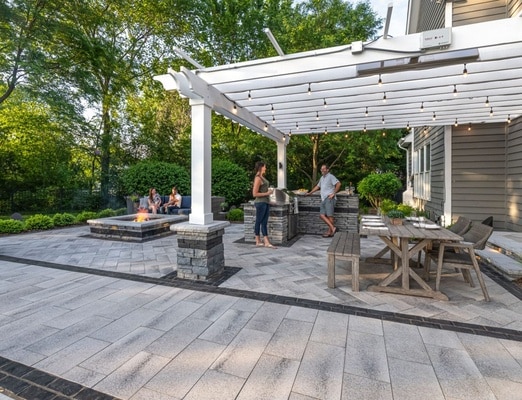
Unilock Beacon Hill Smooth XL paired with Mattoni in a patio featuring a pergola, dining area, and fire feature.
Guide to Choosing the Best Pavers & Slabs for Your Outdoor Space
Choosing the right pavers and slabs starts with understanding where and how the surface will be used. Patios, walkways, driveways, and poolside areas can have different requirements for materials, traction, load performance, installation, and maintenance. In New England, drainage, freeze-thaw exposure, and winter maintenance should also be part of the decision.
This guide will help you compare the main types of pavers and slabs, understand where each option makes sense, and narrow your choices before comparing specific products.
How to Choose Pavers and Slabs
Pavers and slabs are available in concrete, natural stone, porcelain, and other paving systems, with different sizes, colors, textures, and performance requirements.
Pavers are typically smaller or modular, while slabs generally come in larger formats. The distinction can vary by manufacturer and product family, so the product specifications matter more than the name alone.
Before comparing colors or patterns, answer five questions:
- Where will the material be installed? Patio, walkway, driveway, poolside area, or another application?
- What type of traffic will it receive? Pedestrian use and vehicle traffic may require different products.
- What look do you want? Traditional, natural, contemporary, or something in between?
- How much maintenance are you comfortable with? Materials and finishes can have different care requirements.
- What site conditions matter? Drainage, climate, winter maintenance, and installation conditions can influence the final choice.
Considering these factors first can make it easier to narrow down the right product options.
Types of Pavers & Slabs at a Glance
Concrete Pavers
- Best for: Patios, walkways, driveways, and other outdoor areas, depending on the product’s intended application.
- Consider: Thickness, load requirements, traction, format, and pedestrian or vehicular rating.
Natural Stone
- Best for: Patios, walkways, terraces, and selected driveway applications when the product and installation system are appropriate.
- Consider: Stone type, thickness, finish, natural variation, installation requirements, and maintenance.
Porcelain Pavers
- Best for: Patios, walkways, poolside areas, and other outdoor living spaces when installed for the intended application.
- Consider: Traction, installation method, thickness, format, and product-specific application guidance.
Permeable Pavers
- Best for: Projects where drainage or stormwater management is an important consideration, including selected patios, walkways, and driveways.
- Consider: Base design, drainage, joint material, maintenance, local requirements, and traffic rating.
Choosing Pavers by Material
Concrete Pavers
Concrete pavers are available in a wide range of shapes, colors, textures, finishes, and modular patterns. Depending on the specific product, they can work across patios, walkways, driveways, and other hardscape applications.
For driveways and other vehicle areas, confirm that the product is intended for vehicular use. For patios and walkways, there is usually more flexibility to compare size, pattern, finish, and design.
Concrete Slabs
Concrete slabs use larger formats and fewer joint lines, creating a cleaner and more expansive appearance.
They are commonly considered for patios, walkways, and contemporary outdoor spaces. Application suitability still depends on the individual slab, its thickness, installation system, and manufacturer requirements.
Natural Stone Pavers & Slabs
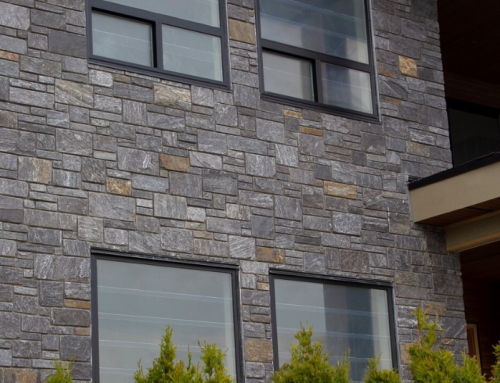
Natural stone offers color variation, texture, and character that are unique to the material and can vary naturally from piece to piece.
Common options include:
- Granite: A natural stone option available in a range of colors, textures, and paver formats.
- Bluestone: Known for its blue-gray and mixed natural tones and widely used for patios, walkways, terraces, and entrances throughout New England.
- Limestone: Offers softer natural tones that can work with both traditional and contemporary designs.
- Sandstone: Offers warm color variation and a distinct natural-stone appearance.
- Slate: Provides strong texture and natural color variation.
Because natural stone can vary from piece to piece, comparing samples in person can be especially useful when color consistency or variation matters to the project.
Natural Stone Cobblestones
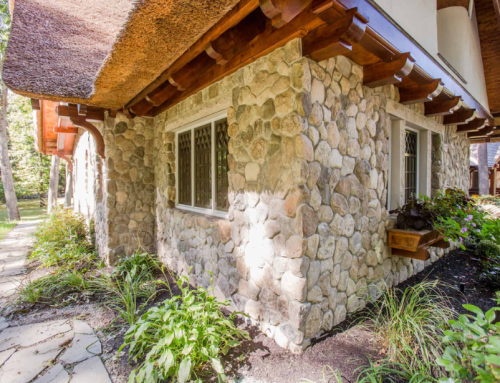
Natural Stone Cobblestones bring a traditional natural-stone character to driveways, walkways, borders, aprons, and accent areas.
Their smaller format is particularly useful when the design calls for texture, detailed pattern work, or visual separation between different paved areas.
Porcelain Pavers
Porcelain pavers offer a more consistent appearance than natural stone and are available in stone-inspired colors, formats, and finishes.
They can be considered for patios, walkways, poolside areas, and other outdoor spaces when the product and installation system are appropriate for the application.
Pavers & Slabs to Compare at Old Station Supply
Once you know which material family and application fit your project, compare specific products instead of assuming every paver within a category performs the same way.
These Old Station Supply options provide four different starting points:
- Unilock Limestone — a natural limestone option with the color and texture variation expected from natural stone. It is worth considering when authentic stone character and natural variation are central to the design.
- Techo-Bloc Industria Smooth Paver — a concrete paver with a smooth HD² finish, clean edges, and a contemporary appearance. Its range of square and rectangular sizes allows for different laying patterns, making it worth considering for projects where modern lines and flexible layout options are priorities.
- Belgard Aqualine — a permeable concrete paver designed for permeable pavement systems that allow water to move through the joints. It is worth considering when drainage and stormwater management are important parts of the project requirements.
- Infinite Outdoor Porcelain Paver Granite Grey — a light-gray porcelain paver. Its consistent stone-inspired appearance and range of rectangular and square sizes make it useful for projects where a more uniform look and layout flexibility are priorities.
Before making a final selection, review the product page and current manufacturer specifications for application ratings, available formats, installation requirements, and maintenance guidance.
Permeable Pavers and Drainage
Permeable pavers are designed as part of a paving system that allows water to move through the joints rather than flowing entirely across the finished surface.
They can be useful where drainage or stormwater management is an important project consideration.
The paver itself is only one part of the system. Base design, joint material, site drainage, maintenance, local requirements, and expected traffic should all be reviewed before selecting a permeable solution.
Choosing Pavers by Project Type
Patios
The best pavers for a patio depend on how the space will be used, the scale of the area, furniture layout, maintenance expectations, and the relationship between the paving surface and the home.
Concrete, natural stone, and porcelain can all be considered depending on the project. Larger formats can create a cleaner, more expansive appearance when large format patio pavers fit the scale and layout of the space.
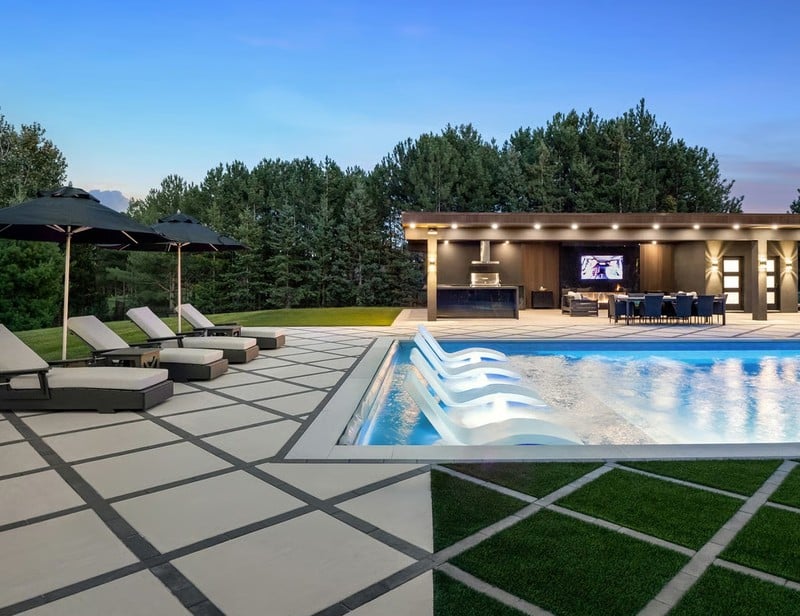
Techo-Bloc Industria Smooth pavers define this modern pool patio and outdoor living space with a clean look.
Walkways
Walkway pavers should balance comfortable foot traffic, traction, scale, pattern, and visual connection to entrances and surrounding landscape features.
Material and format can change the character of a walkway considerably, so reviewing different paver walkway designs can help narrow both the layout and product choices.
Driveways
Driveways require products selected specifically for vehicle loads and the intended installation system.
Before choosing a color or pattern, confirm the product’s vehicular rating, thickness, installation requirements, and other manufacturer specifications. Understanding why concrete pavers can be a strong option for driveways can also help when comparing materials.
Choosing Pavers for Poolside Areas
Poolside surfaces add another set of selection factors because they are regularly exposed to water, sunlight, and barefoot traffic.
When comparing pool deck materials, consider:
- Traction: Compare surface texture and available wet-condition traction information.
- Surface temperature: Material, color, finish, sun exposure, and site conditions can affect how a surface feels underfoot.
- Comfort: Consider how the finish and texture will feel during barefoot use.
- Durability: Confirm that the selected product and finish are appropriate for the expected pool environment.
Avoid assuming that every product within a material category will perform the same way around a pool. Product-specific specifications should guide the final decision.
Choosing the Right Paver Style
Once the material and application requirements are clear, you can narrow the paver style.
- Color: Coordinate with the home, adjacent hardscape materials, and surrounding landscape.
- Texture: Consider both appearance and how the surface will be used.
- Pattern: A laying pattern can create subtle movement or become a major design feature.
- Size: Smaller formats tend to create more visual detail, while larger formats create fewer visual breaks.
Look at these elements together rather than selecting each one independently. A cohesive design typically connects the paving surface to the scale and architecture of the overall project.
Maintenance and Durability
Maintenance requirements vary by material, finish, exposure, installation, and surrounding conditions.
When comparing products, consider routine cleaning, joint maintenance, stain management, settling, and whether the material may require sealing or another manufacturer-recommended treatment.
Maintenance should be part of the product decision rather than something considered only after installation.
Outdoor Space Planning
Material selection works best when it is considered as part of the entire outdoor plan.
Think about how people will move through the space, where vehicles or furniture will be placed, how different areas connect, and which existing materials need to coordinate with the new paving surface.
Paver size, pattern, texture, and material can also be used to distinguish different areas while maintaining a consistent overall design.
Choosing Pavers for New England Conditions
For projects in Massachusetts, Rhode Island, and the surrounding New England region, freeze-thaw exposure, drainage, and winter maintenance should be part of the selection process.
Prioritize effective drainage and confirm and follow the manufacturer’s recommendations for deicing products and winter maintenance.
For driveways and other vehicle areas, verify that the product is rated for vehicular use. For wet or winter conditions, compare available traction information for the specific finish.
Performance varies by manufacturer, material, finish, thickness, and installation system, so application-specific claims should be confirmed with the product team or the manufacturer’s current specifications before final selection.
Budgeting and Cost
Paver and slab costs vary based on the material, specific product, project size, site conditions, installation requirements, and design complexity.
Rather than comparing material price alone, consider the complete project. Site preparation, cuts, installation, pattern complexity, maintenance requirements, and other details can all influence your paver patio cost and overall project cost.
A realistic budget should help narrow your product options without separating price from performance and project requirements.
Conclusion
Choosing the right pavers and slabs starts with the application, then moves through material, performance requirements, style, maintenance, and budget.
Once those priorities are clear, the most useful next step is to compare specific products rather than continuing to compare broad material categories.
Need help narrowing down the options? Visit the Old Station Supply showroom in Norton, MA to compare materials, colors, textures, formats, and combinations for your project in person. Once you find the pavers or slabs that fit your project, you can use the Product Request form on the product page for current pricing, availability, and project-specific guidance.