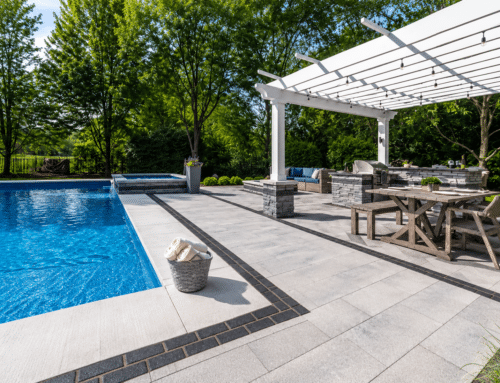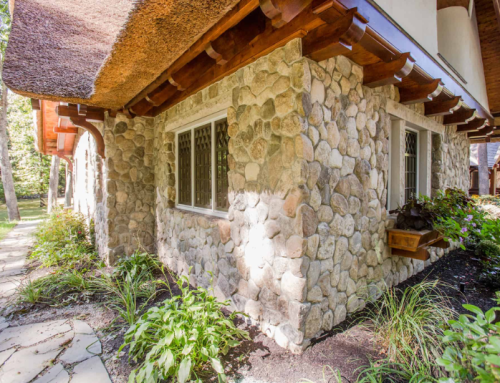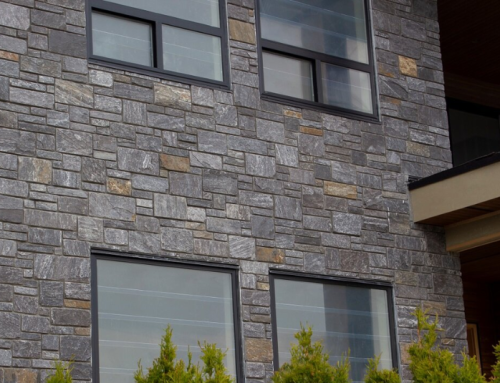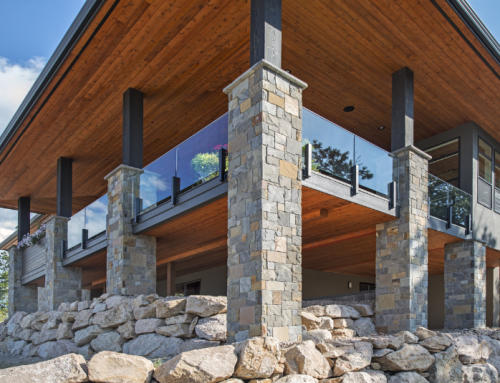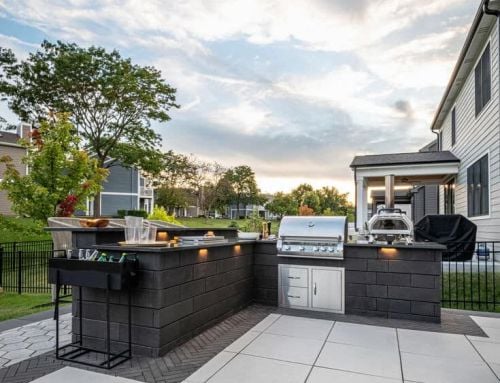
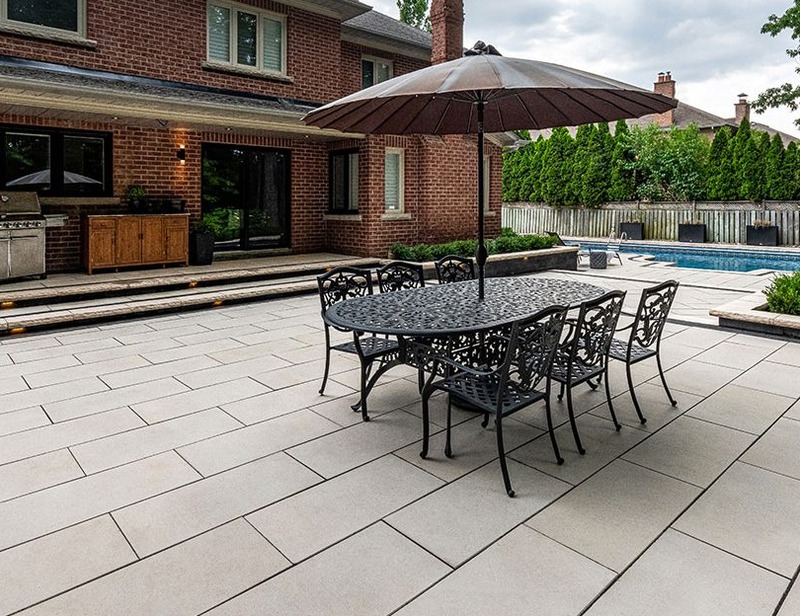
Unilock Urban Slabs in Indiana Buff create a large-format patio that connects the outdoor dining, kitchen, and pool areas.
Large format patio pavers and slabs are larger concrete, natural stone, or porcelain units that create outdoor surfaces with fewer joints and a cleaner sense of scale. They can work well for patios, walkways, pool areas, and certain driveway applications when the selected product is designed for that use.
The right choice depends on material, size, surface texture, application requirements, installation method, and how the format fits the overall space.
At Old Station Supply, large-format options include manufactured concrete slabs, natural stone, and outdoor porcelain. Comparing these materials before choosing a product can help homeowners and landscape professionals move from a design idea to a paving option that fits the project.
What Are Large Format Patio Pavers?
There is no single universal size that defines a large-format paver. In general, the term refers to paving units that are noticeably larger than conventional pavers.
Common formats may include 24 in × 24 in, 24 in × 36 in, and 24 in × 48 in, although actual dimensions vary by material and product line.
Because larger units cover more surface area with fewer pieces, they create fewer visual breaks across the patio. That can give the space a cleaner, more expansive appearance.
Size also affects layout and installation. Cuts, edges, joint spacing, handling, and the dimensions of the project should all be considered before selecting a format.
Types of Large Format Pavers
Large format pavers are available in several materials, and each creates a different look and has different installation and maintenance requirements.
Concrete Large Format Pavers and Slabs
Concrete slabs offer consistent dimensions, clean edges, and a wide range of colors and surface finishes. They work particularly well when the design calls for structured lines or a contemporary layout.
Rather than assuming every concrete slab performs the same way, compare the size, surface, thickness, application information, and installation requirements of the specific product.
Natural Stone Pavers
Natural stone offers color, texture, and pattern variations that are unique to the material and can vary naturally from piece to piece.
Bluestone, granite, limestone, and sandstone can all be considered for large-format designs. Available dimensions and finishes vary significantly by stone and product, making the individual product specifications especially important.
Old Station Supply’s current Bluestone Pavers selection, for example, includes several 24 in × 24 in and 24 in × 36 in formats across different bluestone types.
Granite Pavers
Granite is a natural-stone option for projects where a more architectural appearance and natural variation are part of the design.
Large square and rectangular formats can reduce the number of visual breaks across a patio or walkway. Gray Mist Granite, for example, is offered in larger dimensions, including 24 in × 24 in.
Limestone Pavers
Limestone offers softer natural tones that can work across both traditional and contemporary designs.
When comparing limestone, look at the available dimensions, finish, color variation, and intended application rather than selecting it based on appearance alone.
Porcelain Pavers
Outdoor porcelain can create a more consistent, contemporary surface and is available in large square and rectangular formats.
For patios and pool areas, compare the specific product’s finish, wet-area suitability, installation requirements, and manufacturer specifications before making a selection.
The Infinite Outdoor Porcelain Paver Granite Grey is currently offered in 12 in × 24 in, 24 in × 24 in, and 24 in × 36 in formats.
Large-Format Pavers and Slabs to Compare
- Unilock Urban — a large-format concrete slab option to consider for patios and outdoor living spaces where clean lines, a contemporary appearance, and a larger scale are part of the design.
- Techo-Bloc Blu 60 Smooth — a concrete slab with a smooth surface and clean, contemporary appearance. Its larger-scale format can help create a more continuous-looking paved surface, making it a strong option for patios and outdoor living areas with a modern design direction.
- Unilock Black River Limestone — a natural limestone paver available in larger square and rectangular formats. Its natural color and texture variation make it a strong option for projects where authentic stone character and a more organic large-format appearance are priorities.
- Infinite Outdoor Porcelain Paver Granite Grey — a light-gray porcelain paver available in 12 in × 24 in, 24 in × 24 in, and 24 in × 36 in formats. Its consistent stone-inspired appearance and mix of rectangular and square sizes make it useful for projects where a more uniform look and layout flexibility are priorities.
Why Choose Large Format Pavers for Your Outdoor Space?
One of the main advantages of large-format pavers is their visual scale.
With fewer joints interrupting the surface, patios and walkways can feel more open and cohesive. The larger format can also create a strong backdrop for outdoor furniture, architecture, planting, and other landscape features.
Fewer joints may simplify some aspects of routine surface care, but they should not be treated as a guarantee against movement, cracking, or other installation-related issues.
Large units can also be heavier and may make inconsistencies in base preparation or surface elevation more noticeable, which makes proper product selection and installation especially important.
Ideal Applications for Large Format Pavers
Patios
Patios are a common application for large format patio pavers. Their scale works particularly well where the goal is to create a broad, visually cohesive outdoor living surface.
The layout should still be planned around patio dimensions, edges, stairs, columns, outdoor kitchens, and other features that may require cuts.
Walkways
Large pavers can create clean transitions between entrances, patios, gardens, and other areas of the property.
Consider the width of the walkway and the dimensions of the selected paver so the layout does not create unnecessary cuts or awkward edge conditions.
Pool Decks
Concrete, natural stone, and porcelain can all be considered around pools, but the final choice should be based on the specific product.
Surface texture, traction in wet conditions, surface temperature, maintenance, and manufacturer specifications all matter. For a more complete comparison, see our guide to pavers for pool decks.
Driveways
Some large-format products may be appropriate for driveways, but not every patio slab is designed for vehicle traffic.
Confirm that the selected product and installation system are approved for vehicular use before specifying large pavers for a driveway.
Paver Patterns and Design Ideas for Large Format Pavers
Large formats do not require complicated patterns to create visual interest.
A grid or linear layout creates a structured appearance, while an offset layout can introduce movement when rectangular formats are used.
Mixed-format layouts combine multiple dimensions for more variation. Large pavers can also be paired with smaller pavers, borders, natural stone, or gravel to define different zones within the landscape.
A suitable pattern should work with the actual dimensions of the space, limit unnecessary cuts, and support the intended design.
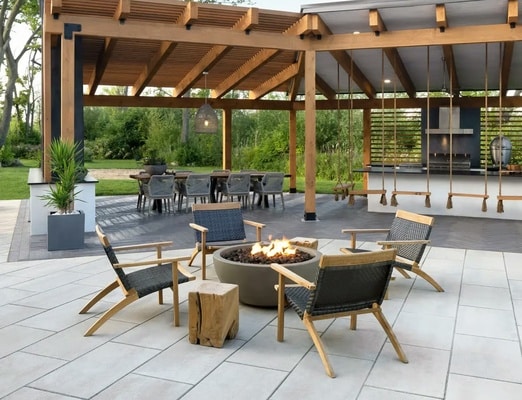
Techo-Bloc Blu 60 Smooth Slabs in Greyed Nickel used across a large patio with a fire pit and covered outdoor living area.
How to Choose the Right Large Format Pavers for Your Project
Start with the application, not the color.
First determine whether the surface will be used for a patio, walkway, pool area, driveway, or another application. That immediately narrows the products that should be considered.
Next, compare the actual dimensions of the paving units with the dimensions of the project. A large slab may look excellent in one layout but require excessive cutting in another.
Then consider the material and finish. Concrete provides a wide range of manufactured styles, natural stone brings inherent variation, and porcelain offers a more consistent manufactured appearance.
Installation requirements should be part of the decision as well. Base preparation, drainage, jointing, edge conditions, and handling can differ between concrete slabs, natural stone, and porcelain.
For projects in Massachusetts and Rhode Island, local conditions should also be considered when confirming the product and installation system. Product-specific guidance and manufacturer requirements should take priority over general assumptions about any material.
For a broader material and application comparison, see Choosing the Right Pavers & Slabs for Your Outdoor Space.
Installation of Large Format Patio Pavers
Proper installation is important for any paved surface, but larger units make base preparation, alignment, drainage, and handling particularly important.
Installation methods vary by material and paving system, so the selected product’s requirements should guide the project.
1. Prepare the Area
Prepare the site and build the base or substrate required for the project conditions and selected paving material.
Drainage, compaction, elevation, and edge conditions should be addressed before the units are installed.
2. Lay and Align the Pavers
Install the pavers while maintaining the required joint spacing, alignment, and surface elevation.
Because large pieces can be heavy and difficult to reposition, some products or projects may require specialized handling equipment.
3. Complete the Joints and Finishing
Use a jointing material that is appropriate for the selected paving system.
Sealing should not be treated as a universal requirement. Review the recommendations for the specific concrete, natural stone, or porcelain product before applying any sealer or treatment.
Maintenance and Care of Large Format Pavers
Maintenance depends on the material.
Concrete, natural stone, and porcelain can require different cleaners, treatments, and sealing approaches. Follow the product or manufacturer’s care recommendations rather than applying the same maintenance process to every surface.
If an individual unit becomes damaged, some paver or slab systems allow individual units to be replaced. Large or heavy units, however, may require professional handling.
Conclusion
Large-format patio pavers should be selected by first considering how the finished space will be used. Start with the required application, then compare material, size, surface, layout, installation requirements, and maintenance before deciding on a product.
If you’re comparing concrete slabs, natural stone, or porcelain for a project in Massachusetts or Rhode Island, visit the Old Station Supply showroom in Norton to compare formats and finishes in person. Once you’ve narrowed down your options, visit the individual product pages to request project-specific pricing and availability from Old Station Supply.