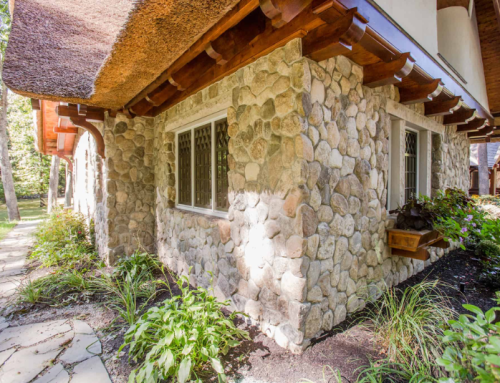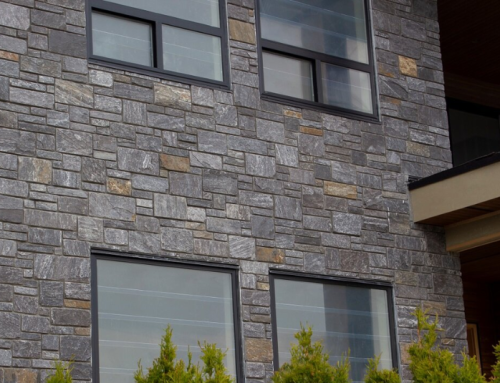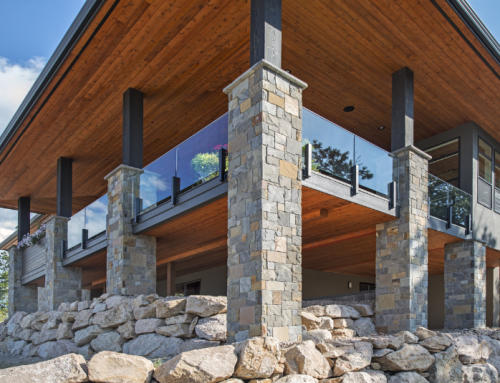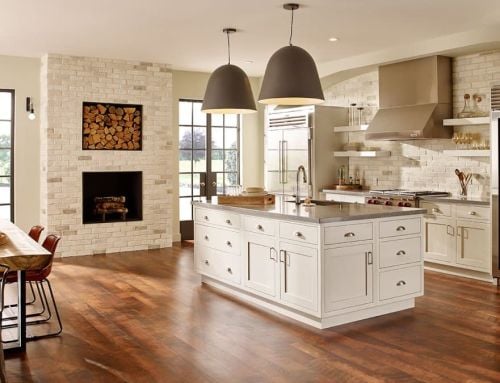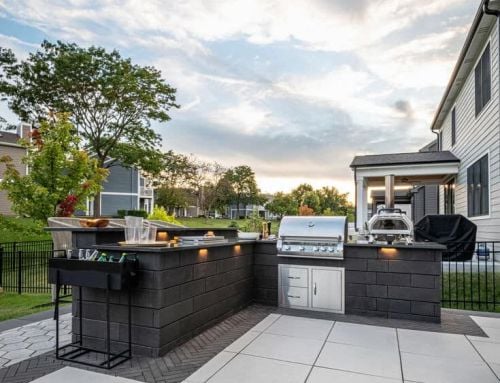
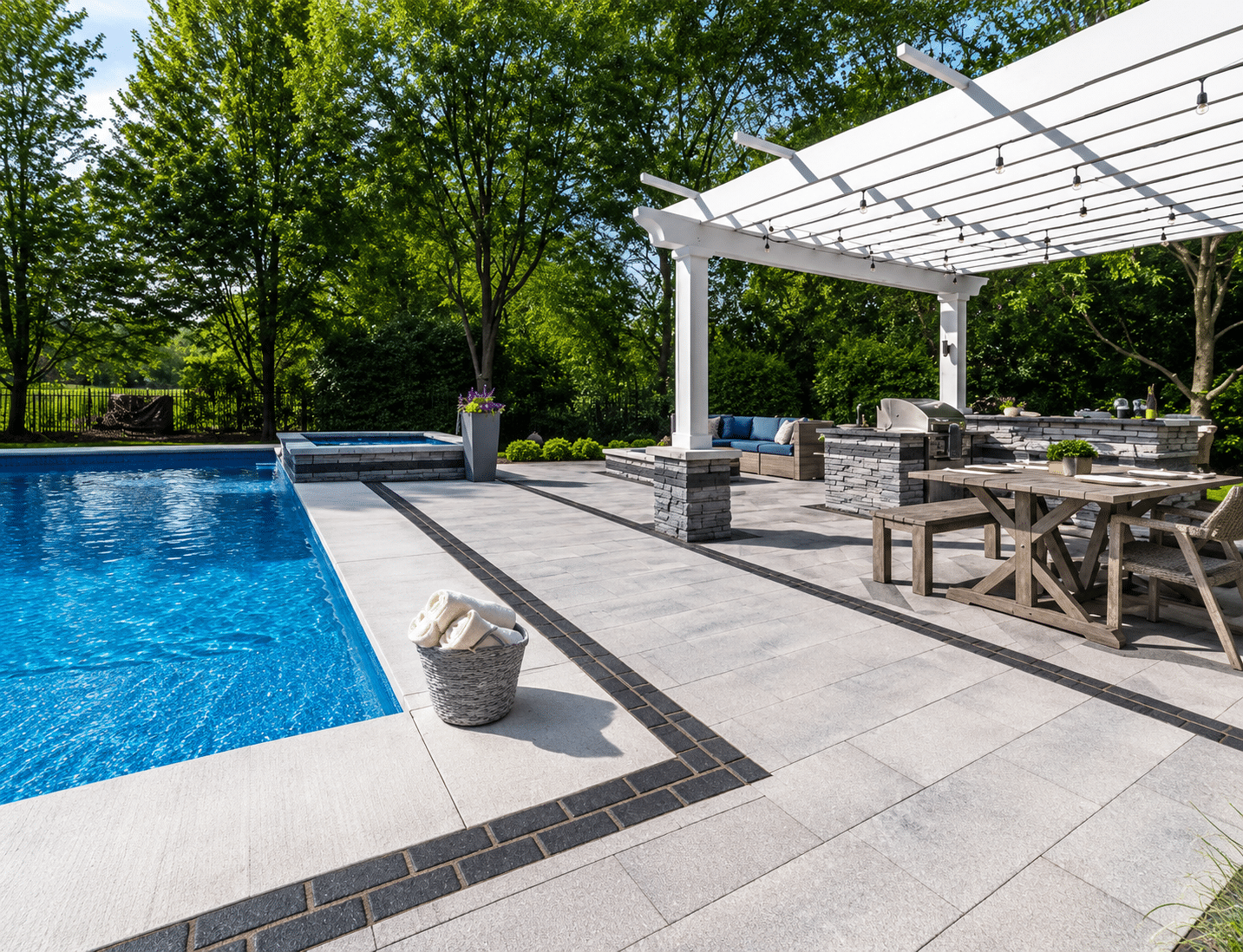
Unilock Umbriano pavers used to create a poolside patio with outdoor dining and entertaining space.
The pavers vs. concrete patio decision comes down to your budget, design goals, maintenance expectations, and how you want the patio to perform over time.
Poured concrete creates a continuous surface and, depending on the project, may have a lower initial installation cost than a paver patio. Pavers provide more choices in materials, colors, formats, and patterns, with individual units that can often be removed or replaced when repairs are needed.
Neither option is right for every project. Understanding the differences can help you choose the patio system that makes the most sense for your property.
Pavers vs Concrete for Patio Projects: The Main Differences
When comparing pavers vs concrete for patio projects, focus on a few practical differences.
| Factor | Pavers | Poured Concrete |
|---|---|---|
| Cost | Varies by material, format, site prep, and installation. | Basic poured concrete may cost less upfront in some projects. |
| Design | More options for colors, textures, sizes, and patterns. | Continuous surface; can be stamped, colored, or textured. |
| Repairs | Individual units can often be reset or replaced. | Repairs may require patching or replacing a larger area. |
| Future changes | Sections can often be lifted and reinstalled. | Changes usually require cutting or removing concrete. |
These differences matter more than simply deciding which material is “better.”
What Is the Difference Between Patio Pavers and Concrete?
The biggest difference between patio pavers vs concrete is how the surface is built.
A concrete patio is poured as a continuous slab with planned joints. Paver patios are assembled from individual units installed as part of a complete base, bedding, joint, and edge-restraint system.
Paving options can include manufactured concrete pavers, natural stone, and outdoor porcelain pavers or slabs. If you decide pavers are the better system for your project, the next step is choosing the right paver or slab based on the application, appearance, and project requirements.
Are Pavers or Concrete More Expensive?
Initial costs can differ considerably between poured concrete and paver installations, depending on the project. Basic poured concrete may have a lower initial installation cost than some paver installations, but this is not a universal rule. Decorative finishes, material selection, site conditions, and installation complexity can change the comparison.
The final cost depends on factors such as patio size, site preparation, access, material selection, layout, drainage requirements, and installation complexity.
Paver pricing also varies considerably between manufactured concrete pavers, natural stone, porcelain, and different sizes or finishes. Understanding how much a paver patio costs can help you see how material choice, site conditions, and project complexity affect the overall investment.
Pavers vs. Concrete: Repairs and Maintenance
Repairs are one of the most practical differences in a concrete patio vs pavers comparison.
Because poured concrete forms a continuous surface, cracking or damage may require patching or work on a larger section. With pavers, individual units or localized areas can often be removed, reset, or replaced.
That does not mean pavers are maintenance-free or immune to movement. Base preparation, drainage, installation, joint materials, and the selected product all affect how a patio performs.
Maintenance requirements also vary by material and manufacturer, so product-specific guidance should be considered before choosing a surface.
How Do Pavers and Concrete Compare in New England?
Massachusetts and Rhode Island patios experience seasonal temperature changes, moisture, snow, ice, and freeze-thaw conditions. Those conditions make proper site preparation and drainage important whether the patio uses pavers or poured concrete.
Rather than assuming one system automatically performs better in New England, consider the complete installation and the specifications of the material being used.
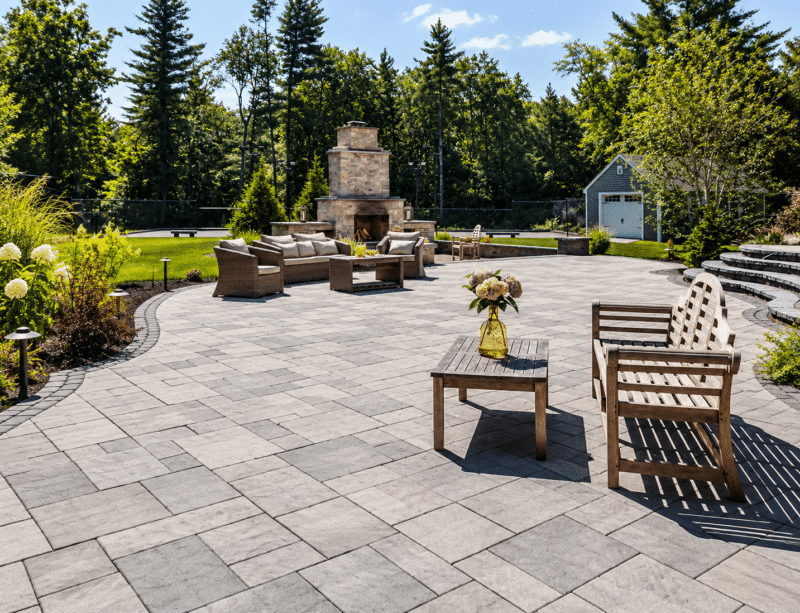
Techo-Bloc Eva Slate Pavers in Champlain Grey used to create a spacious patio with outdoor seating and a fireplace.
Design Options: Paving Stones vs Concrete
Design flexibility is often a major reason homeowners consider paving stones vs concrete.
Pavers are available in different colors, textures, shapes, and formats, making it possible to create patterns, borders, transitions, or defined outdoor living areas. For a simpler, more contemporary look, large-format patio pavers can create broader visual surfaces with fewer individual units.
Poured concrete offers a more continuous appearance. Decorative techniques such as stamping, coloring, and texturing can provide additional design options without changing the basic poured-slab construction.
The right option depends on the architecture of the property and the look you want to create.
When Does a Concrete Patio Make Sense?
Concrete deserves serious consideration when you want a continuous surface, a relatively straightforward design, or when initial project cost is an important part of the decision.
Stamped or decorative concrete can also provide more visual variation than standard poured concrete.
For some properties, those advantages may matter more than having individual paving units.
When Do Patio Pavers Make Sense?
Pavers may be a better fit when material selection, design flexibility, localized repairs, or future access to sections of the patio are important priorities.
- Unilock Umbriano® — a concrete paver with a granite-inspired appearance and subtle surface variation. It is a strong option to compare for patios where a refined, contemporary look and flexible sizing are important.
- Techo-Bloc Eva Slate Pavers — a concrete paver with a textured slate-inspired surface and a three-piece modular format. It can be used for patios and supports both modular and linear layouts, making it useful for projects that call for a more traditional stone-like appearance with pattern flexibility.
- Bluestone Pavers — a natural stone option with the blue-gray color and natural variation associated with bluestone. It is worth considering for patios where authentic stone character and a more natural appearance are priorities.
- Infinite Outdoor Porcelain Paver Granite Grey — a light-gray porcelain paver available in multiple square and rectangular sizes. It is worth considering for patios where a more consistent stone-inspired appearance, lower-maintenance material, and layout flexibility are priorities.
These products are not interchangeable, but comparing different materials and formats can help clarify what you actually want from the finished patio.
Pavers vs. Stamped Concrete: Does the Comparison Change?
Stamped concrete adds pattern and texture to a poured surface, but the fundamental difference remains the same: stamped concrete is still a continuous concrete installation, while pavers are individual units.
When comparing pavers vs concrete, consider the entire system rather than appearance alone. Think about cost, design, repairs, maintenance, site conditions, and how you may use or modify the patio in the future.
Which Is Better: Pavers or Concrete for a Patio?
There is no universal winner when comparing pavers vs. concrete for a patio.
Concrete can make sense when a continuous surface and initial project cost are priorities. Depending on the project, basic poured concrete may have a lower initial cost than a paver installation, but material, finish, site conditions, and installation requirements can change the comparison. Pavers can make sense when broader material and design choices and greater flexibility are priorities.
Once you know which factors matter most for your project, compare actual materials rather than choosing based only on the general category.
Old Station Supply serves homeowners and landscape professionals throughout Massachusetts and Rhode Island from our Norton showroom, where you can compare paver materials, colors, textures, and formats in person.
When you find a paver or slab that fits your project, visit its product page to request current pricing, availability, and project-specific information from Old Station Supply.