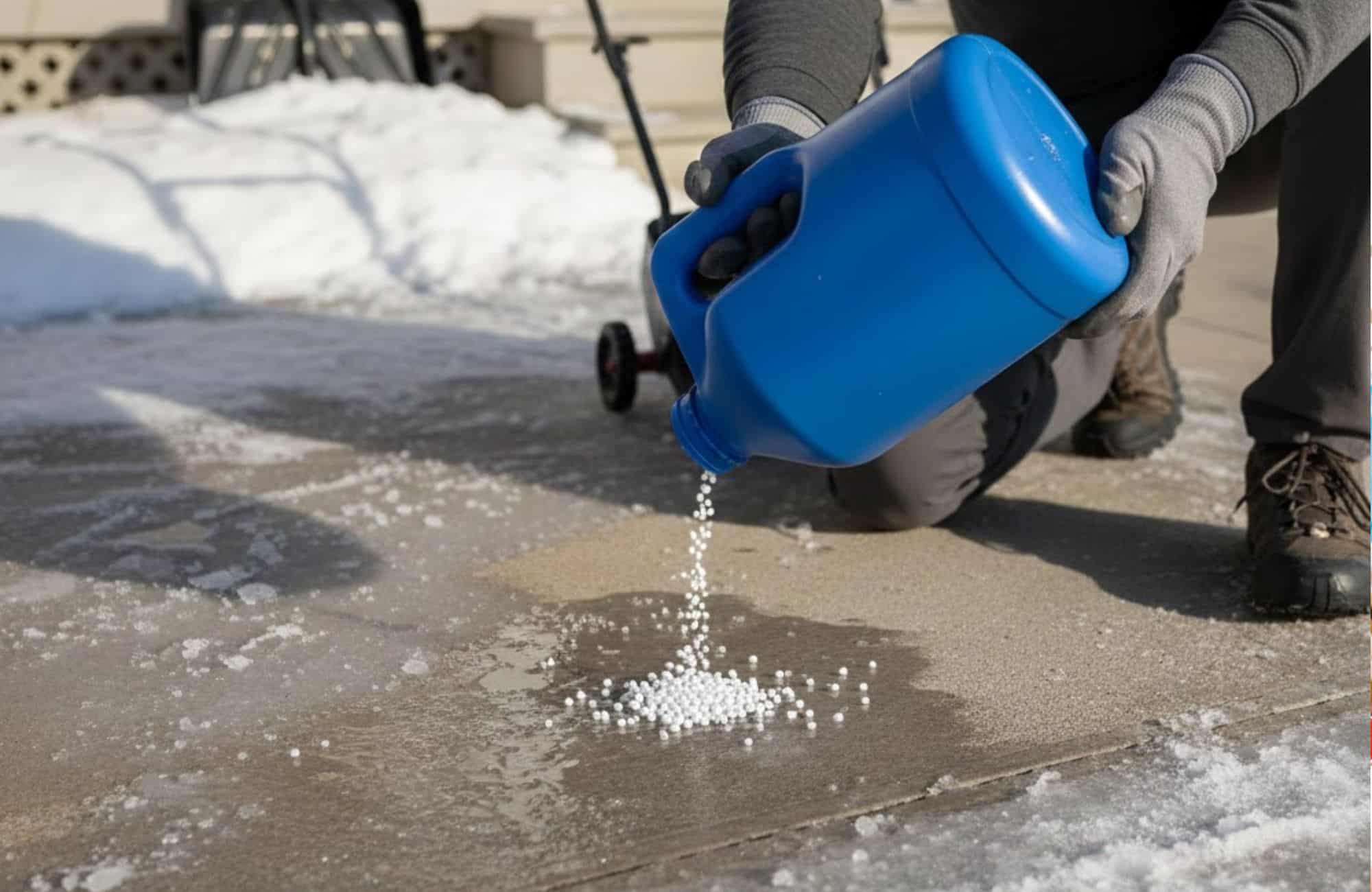
Winter weather brings a host of challenges, especially when it comes to maintaining your concrete surfaces. As snow and ice accumulate, many homeowners turn to deicers to melt the buildup and prevent hazardous conditions. One of the most commonly used deicing agents is calcium chloride pellets. However, a question arises: is calcium chloride safe for concrete?
In this article, we’ll explore how calcium chloride works, its impact on concrete, and whether it’s the best option for your driveway, sidewalks, or other concrete surfaces. We will also cover the best alternatives for protecting your concrete while keeping your property safe during icy conditions. At Old Station Outdoor & Landscape Supply, we offer expert advice and high-quality deicing products to help you make the right choice for your concrete surfaces.
What Is Calcium Chloride and How Does It Work?
Calcium chloride is a chemical compound used primarily as an ice melter and deicer during winter months. It’s known for its effectiveness in melting ice at lower temperatures compared to traditional rock salt. Unlike salt, which works by lowering the freezing point of water, calcium chloride actually releases heat as it dissolves, which speeds up the melting process even in colder temperatures.
How Does Calcium Chloride Work on Concrete?
When you apply calcium chloride to snow or ice, it quickly dissolves, creating a brine solution that lowers the freezing point of water and accelerates the melting of ice. As the calcium chloride absorbs moisture from the air, it releases heat (an exothermic reaction). This makes it highly effective at melting ice at temperatures as low as -25°F.
However, while this chemical is effective for snow removal, its long-term effects on concrete surfaces are worth considering. To understand the impact on concrete, it’s essential to know how freeze-thaw cycles contribute to the damage that can occur over time.
How Calcium Chloride Affects Concrete
Using calcium chloride pellets on concrete surfaces, especially in areas with freeze-thaw cycles, can lead to significant damage over time. The repeated expansion and contraction caused by moisture infiltration can result in surface deterioration and cracking.
Freeze-Thaw Damage
Concrete is a porous material, which means it absorbs moisture. When calcium chloride is applied, it not only melts the ice but also increases the moisture levels in the concrete. When the temperature drops again, this moisture freezes inside the concrete, causing it to expand and contract. Over time, this repetitive cycle of freezing and thawing can cause spalling. Spalling is a process where the surface of the concrete begins to flake off and deteriorate.
Surface Degradation
In addition to freeze-thaw damage, calcium chloride can also cause chemical reactions with the concrete’s surface layers, weakening its structural integrity. Prolonged exposure can lead to corrosion of steel reinforcements, which further weakens the concrete.
Concrete surfaces that are newly poured are especially vulnerable, as they haven’t fully cured and are still prone to absorbing excess moisture. For new concrete, it’s best to avoid using calcium chloride until the concrete has reached its full strength.
Chemical Reactions
In addition to freeze-thaw damage, calcium chloride can react with calcium hydroxide in cement, forming calcium oxychloride. This chemical reaction can cause internal stress in the concrete, potentially leading to surface degradation over time. This is more of a concern in older concrete or concrete that has not been properly cured, as the moisture from calcium chloride may exacerbate the process.
Impact on Steel Reinforcements
Chloride ions from calcium chloride can disrupt the protective alkaline barrier around internal steel reinforcements. This leads to rust formation and can eventually cause cracking or spalling in the concrete. As the steel reinforcement rusts, it expands, causing the surrounding concrete to crack, further weakening the structure.
Alkali-Aggregate Reaction
Calcium chloride can also worsen internal concrete expansion and deterioration over time due to alkali-aggregate reactions. This reaction occurs when the alkalis in the cement react with reactive silica in the aggregates, leading to expansion and cracking in the concrete. Over time, this exacerbates the deterioration, especially when calcium chloride accelerates moisture absorption.
Impact on Weak or Non-Air-Entrained Concrete
Calcium chloride pellets can damage weak, old, or non-air-entrained concrete by exacerbating freeze-thaw cycles and corroding rebar. Non-air-entrained concrete, in particular, is more vulnerable to cracking and deterioration when exposed to freeze-thaw conditions, and the use of calcium chloride can accelerate this process.
When to Use Calcium Chloride on Concrete
While calcium chloride can be harmful in some situations, there are times when it can be safely used on concrete.
Best Practices for Using Calcium Chloride
If you need to use calcium chloride on your concrete surfaces, follow these best practices to reduce damage:
- Use it on well-cured concrete: Calcium chloride is less likely to cause damage if the concrete is fully cured (at least 28 days old).
- Apply sparingly: Use only the amount needed to melt the ice effectively, and avoid over-applying the pellets. Applying too much increases the chances of surface degradation.
- Apply before ice forms: Applying calcium chloride before snow or ice accumulates can prevent it from becoming entrenched in the surface, thus reducing its ability to penetrate and damage the concrete.
- Use a spreader: This ensures even application and prevents large deposits of calcium chloride from sitting in one spot, which could cause localized damage.
Alternative Recommendation
For reinforced or decorative concrete, it is recommended to use non-chloride accelerators or chloride-free deicers to avoid corrosion and staining. These alternatives are gentler on concrete and help protect both the appearance and integrity of your surface.
Safe Alternatives to Calcium Chloride for Concrete
If you’re concerned about the long-term effects of using calcium chloride on your concrete surfaces, there are safer alternatives that can still get the job done without compromising your concrete.
Magnesium Chloride
Magnesium chloride is an excellent alternative to calcium chloride, as it is less damaging to concrete. It works in temperatures as low as -13°F, making it suitable for most winter weather conditions. Magnesium chloride is also environmentally friendly and less corrosive to both concrete surfaces and metal compared to calcium chloride.
Sodium Acetate
For those looking for a pet-safe and environmentally friendly option, sodium acetate is a good choice. This alternative works in similar cold temperatures and is safe for use on driveways, sidewalks, and other treated areas. It’s commonly used in public spaces and areas with sensitive vegetation.
Sand and Other DIY Options
In addition to chemical-based options, sand and coffee grounds can be used to improve traction on icy surfaces without causing damage to the concrete. While these options won’t melt the ice, they can be effective in preventing slips and falls.
How to Protect Your Concrete from Ice Melt Damage
If you want to keep your concrete surfaces safe during winter, it’s essential to protect them from the potentially harmful effects of deicing chemicals.
Sealing Your Concrete
Before winter hits, apply a concrete sealer to your surfaces. This protective layer prevents ice melts like calcium chloride from penetrating deep into the concrete. It also reduces the chances of spalling caused by moisture absorption.
Regular Maintenance
After the winter season ends, rinse your concrete thoroughly to remove any residual chemicals. This can help prevent damage from buildup over time. Additionally, consider using salt-free alternatives if you need to apply ice melt during particularly cold weather.
Conclusion
While calcium chloride pellets are effective at melting ice on concrete surfaces, they can cause long-term damage if used improperly, especially on new concrete. To protect your concrete, consider safer alternatives like magnesium chloride or sodium acetate. Always seal your concrete and apply deicers sparingly to maintain the integrity of your surfaces throughout the winter.
At Old Station Outdoor & Landscape Supply, we offer high-quality deicing products and expert advice to help you keep your concrete safe during the winter months. Contact us today to learn more about our concrete-safe ice melt options and get the best products for your needs.
FAQs
Is there a type of ice melt that is safe for concrete?
Yes, magnesium chloride and calcium magnesium acetate (CMA) are safe options for concrete. These alternatives to rock salt are gentler on concrete surfaces and less likely to cause spalling or surface damage. When choosing an ice melt for concrete, look for eco-friendly and pet-safe products labeled as concrete-safe to reduce the risk of long-term damage.
How long should I wait before using ice melt on new concrete?
It’s recommended to wait at least one year before applying ice melt on new concrete. Freshly poured concrete is more porous and vulnerable to damage from deicing chemicals. Calcium chloride and other salts can cause surface cracking and spalling if applied before the concrete fully cures. Wait until the concrete has fully cured (typically 28 days or more) before using ice melt products.
What should I use on concrete if I want to protect it but still deal with ice and snow?
To protect your concrete while managing ice and snow, opt for magnesium chloride or calcium magnesium acetate (CMA), which are gentler on concrete than sodium chloride (rock salt). Additionally, sand and coffee grounds provide traction without damaging the surface. For better long-term protection, seal your concrete before winter to prevent moisture absorption and reduce the risk of freeze-thaw damage.
Does using ice melt really damage concrete, and is it worth the risk compared to shoveling or other methods?
Yes, overusing ice melt, especially rock salt, can damage concrete over time, leading to cracking, spalling, and surface degradation. While manual snow removal (shoveling or using a snow blower) is more time-consuming, it’s safer for your concrete. To minimize damage, use eco-friendly deicers, apply sparingly, and consider shoveling or using traction materials like sand as your primary method for ice management.