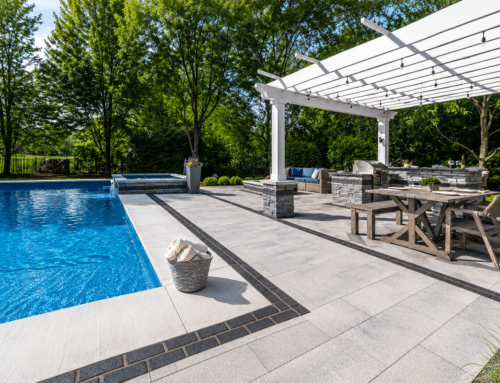

Concrete pool coping is one of those details that often gets overlooked during pool planning, yet it plays a major role in how a pool looks, feels, and performs over time. It is the material that caps the edge of a swimming pool. This creates a clean transition between the water and the surrounding outdoor spaces. Beyond appearance, coping protects the pool structure, improves safety, and adds a finished, intentional look to the entire area.
In this guide, you will learn what concrete pool coping is and explore the different types and finishes available. We will also explain how it compares to natural stone and porcelain, along with what installation typically involves and which factors affect cost. The insights shared are informed by the product expertise and real-world experience you’ll find at Old Station Outdoor & Landscape Supply.
What Is Concrete Pool Coping and Why Does It Matter
Concrete pool coping is the finishing material installed along the top edge of a pool, between the pool shell and surrounding surfaces like patios, pavers, or tile. Although it may seem minor, coping plays a critical role in durability, safety, and overall appearance. Structurally, it directs water away from the pool edge, reducing moisture penetration and long-term damage from repeated wetting and drying. It also creates a smooth, comfortable edge that makes sitting, gripping, and entering the pool safer and easier.
Beyond function, concrete pool coping serves an important design purpose. It visually frames the pool and connects it to the patio and surrounding outdoor space. As a result, the pool feels more cohesive and intentionally designed. When chosen carefully, coping can elevate a simple pool into a timeless and polished feature.
Types of Concrete Pool Coping
Concrete pool coping comes in several forms, each designed to suit different pool styles, layouts, and installation preferences. Understanding these options helps ensure the coping you choose matches both your functional needs and design goals.
Precast Concrete Pool Coping
Precast concrete pool coping is manufactured off-site under controlled conditions and delivered as individual pieces with consistent dimensions, clean edges, and reliable finishes. Because it uses a modular system, it works well for both straight and curved pools and allows damaged pieces to be replaced easily. Available in bullnose, rounded edge, and square edge profiles with matching corners and curves, precast coping creates a seamless look and supports precise, predictable installation timelines.
Poured-in-Place and Cantilever Concrete Coping
Poured-in-place concrete coping, often called cantilever coping, is formed and poured directly at the pool edge to create a clean, continuous surface. It works well for modern designs and pools with simple geometry, but repairs can be more challenging if cracking occurs. Because it is installed on site, cantilever coping requires careful planning to ensure proper slope, drainage, and expansion control.
Bullnose vs Square Edge Profiles
Edge profile plays an important role in comfort, safety, and overall pool use. Bullnose coping features a rounded edge that feels smoother to the touch and reduces sharp corners, making it a popular choice for family pools and seating areas. In contrast, square edge coping delivers a crisp, modern look suited for minimalist or architectural designs, though it requires precise installation and can feel firmer when used as a seating edge.
Concrete Pool Coping Finishes and Design Options
One of the strengths of concrete pool coping is its design flexibility. Concrete can be shaped, textured, and colored in ways that allow it to complement a wide range of pool styles and outdoor spaces.
Before reviewing specific finish options, it helps to understand how the finish choice affects both appearance and performance. Finish influences slip resistance, heat retention, and how well the coping holds up over time.
Common concrete pool coping finishes include:
- Smooth finishes that create a clean, refined look but require careful slip-resistance planning
- Sandblasted surfaces that add texture and improve grip when wet
- Exposed aggregate finishes that blend natural stone texture with concrete durability
- Lightly textured finishes designed specifically for wet environments
Color is another important consideration. Integrally colored concrete allows pigments to be mixed throughout the material, creating consistent tones that resist fading. Lighter colors tend to stay cooler underfoot, while darker colors can create a bold, sophisticated look but may retain more heat.
When designing a pool area, coping should visually connect with surrounding elements such as pavers, patio surfaces, and waterline tile. Matching or complementing these materials helps create a unified outdoor space rather than a pool that feels visually separate.
Concrete Pool Coping vs Other Pool Coping Materials
Concrete is not the only option available for pool coping, but it remains one of the most practical and versatile choices. Comparing it with other common materials highlights where it excels.
| Coping Material | Durability & Climate Performance | Safety & Comfort | Maintenance & Cost | Design Considerations |
|---|---|---|---|---|
| Concrete Coping | Performs well in most climates, including freeze-thaw areas | Can be textured for slip resistance and shaped for comfort | Generally, lower-cost, modular pieces allow easier replacement | Highly versatile with multiple profiles, finishes, and colors |
| Natural Stone Coping | Durable but varies by stone type | Comfortable when properly finished | Higher cost, often requires sealing, may chip or wear unevenly | Offers organic beauty and natural variation |
| Porcelain Coping | Strong and stain-resistant | Can be slippery when wet if not pool-rated | Low maintenance but higher material cost | Sleek, modern appearance with limited texture options |
| Brick Coping | Durable in mild climates | Firmer edge with limited comfort shaping | Moderate cost, may require more upkeep | Traditional look with less design flexibility |
For many swimming pools, concrete coping strikes the right balance between durability, safety, appearance, and cost.
Concrete Pool Coping Installation Basics
Proper installation is just as important as material selection. Concrete coping can be prone to cracking if expansion joints, drainage, and reinforcement are not handled correctly, particularly in freeze-thaw climates. Careful detailing and proper structural support help ensure long-term performance.
- Prepare a stable base and install the coping with a slight slope away from the pool to promote proper water drainage.
- Use expansion and separation joints so the coping and surrounding materials can move independently and reduce cracking risk.
- Account for corners, curves, and transitions during layout to maintain a clean, consistent edge.
- Use modular precast systems with straights, corners, and curved pieces to simplify installation and ensure proper fit.
One advantage of precast concrete coping is that damaged pieces can often be replaced individually without removing the entire pool edge or patio. This flexibility adds long-term value and reduces future repair costs.
How Much Does Concrete Pool Coping Cost?
The cost of concrete pool coping varies based on several factors. While it is generally more affordable than many natural stone options, pricing depends on design complexity and installation requirements.
Key factors that influence cost include:
- Edge profile, such as bullnose or square edge
- Straight versus curved pool layouts
- Standard versus custom dimensions
- Finish type and color selection
- Installation complexity and labor requirements
Projects with complex curves, custom colors, or intricate finishes typically cost more than simple rectangular pools with standard precast pieces. However, concrete coping often provides strong long-term value due to its durability and repair flexibility.
Maintenance, Sealing, and Longevity
Concrete pool coping requires minimal maintenance, but routine care helps preserve its appearance and performance. Sealing is often recommended to reduce staining and moisture absorption, though the need for a sealer can vary depending on climate, finish, and exposure conditions. Regular cleaning with mild, pool-safe cleaners helps prevent buildup from chemicals, dirt, and debris.
In colder climates, proper winterization and avoiding harsh deicing products help extend the coping’s lifespan. With correct installation and basic maintenance, concrete pool coping can last for decades while maintaining its structural integrity and appearance.
How to Choose the Right Concrete Pool Coping for Your Project
Choosing the right concrete pool coping comes down to balancing function, style, and long-term performance. Start by considering your pool shape, climate, and how the space will be used. Safety, comfort, and durability should guide finish and profile selection, while color and texture help achieve the desired look.
When coping aligns with surrounding materials and overall design vision, it becomes more than just a functional element. It becomes the finishing touch that brings the entire pool and patio together.
Conclusion
Concrete pool coping offers a durable, versatile, and visually refined solution for modern swimming pools. When chosen and installed correctly, it protects the pool structure, improves safety, and creates a cohesive connection between the pool and surrounding outdoor spaces. From precast and cantilever options to profile, finish, and cost considerations, understanding the details allows you to make confident decisions that balance performance, style, and long-term value.
At Old Station Outdoor & Landscape Supply, we help homeowners, contractors, and designers choose concrete pool coping that fits their project goals and design vision. Our team offers expert guidance, quality materials, and a wide range of coping options to match your pool, patio, and outdoor space. Contact our team to explore products, compare finishes, and get the support you need to complete your pool project with confidence.
FAQs
Can you paint the concrete pool coping?
Yes, you can paint concrete pool coping, but it is generally not recommended for long-term results. Paint tends to wear quickly in wet, high-traffic pool areas and can peel, fade, or become slippery over time. If a color change is needed, concrete stains or integral coloring during replacement are more durable options. Sealing or refinishing is usually a better alternative than painting.
How to clean concrete pool coping?
To clean concrete pool coping, start with mild soap, warm water, and a soft brush to remove dirt and residue. For tougher buildup from pool chemicals or organic stains, use a pH-neutral concrete cleaner designed for pool environments. Avoid harsh acids, bleach, or pressure washing at high force, as these can damage the surface and weaken the concrete over time.
How to fix concrete pool coping?
Fixing concrete pool coping depends on the type of damage. Small cracks or chips can often be repaired using concrete patching compounds designed for outdoor and wet conditions. Loose or severely cracked coping pieces usually need to be removed and replaced to prevent further structural issues. Proper expansion joints and drainage should be addressed during repairs to avoid repeat damage.
How to get concrete off pool coping?
To remove concrete residue from pool coping, allow the concrete to partially cure, then gently scrape it off using a plastic or rubber scraper. For hardened concrete, a concrete-safe remover or diluted masonry cleaner can help loosen the material. Always test cleaners on a small area first and rinse thoroughly to avoid damaging the coping surface.